This post contains affiliate links, and I may earn a small commission if you make a purchase through them. These earnings help me maintain this website and continue creating more helpful content. Thank you for supporting my work. ❤️
Wearing a wig every day can make styling easier, protect your natural hair, and give you the freedom to change your look whenever you want. However, new wig wearers often have practical concerns: Will it feel hot? Could the wind blow it off? Where should you put your natural hair? Can you sleep or exercise in it?
Here are straightforward answers to nine of the most common questions about wearing wigs in daily life.
1. Do Wigs Feel Hot?
Wigs can feel warmer than your natural hair, but a good wig should not feel unbearably hot. Comfort depends mainly on the cap construction, hair density, length, and weather.
Lace and open-wefted caps usually allow more airflow than thick, fully machine-made caps. Lightweight or glueless wigs may also feel more comfortable for everyday wear.
The hair material matters less than many people think. Human hair may look and move more naturally, but the wig cap underneath has the greatest effect on ventilation.
For warmer weather, consider:
A lace or open-wefted cap
A lower-density wig
A short or shoulder-length style
A glueless wig that is easy to remove
A breathable wig grip or cap
If your scalp becomes itchy or sweaty, take the wig off when possible and allow your scalp to dry.
2. Can the Wind Blow My Wig Off?
A properly fitted wig should stay in place during normal daily activities, including walking, bending down, light jogging, and riding a bicycle.
Most wigs have adjustable straps inside the cap. Tighten them until the wig feels secure but not uncomfortable. A wig that is too tight can cause headaches and put unnecessary pressure on your hairline.
For additional security, you can use:
A wig grip
Built-in combs or clips
Bobby pins
Wig tape
Wig adhesive
Glueless wigs with adjustable bands are particularly convenient for everyday wear because they can stay secure without glue.
However, no attachment method is completely risk-free during extreme activities. It is probably best to remove your wig before swimming, riding a high-speed roller coaster, or doing anything involving strong wind.
3. Where Do I Put My Natural Hair Under a Wig?
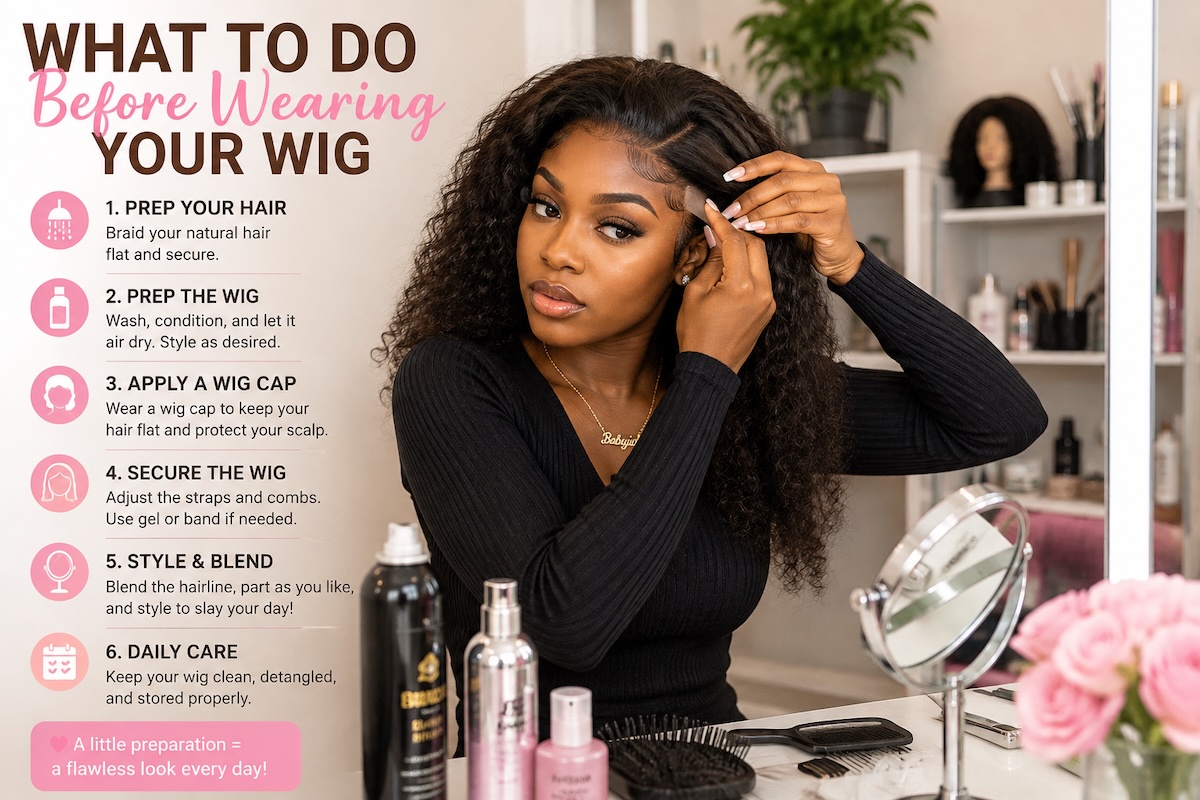
Your natural hair should lie as flat as possible under the wig. A smooth base helps the wig fit correctly and prevents bumps, especially at the back of the head.
If you have long hair, you can braid it into flat cornrows or divide it into two low, flat braids. Wrap the braids around your head instead of piling them at the back.
If your hair is short, brush or smooth it backward before putting on a wig cap.
After flattening your hair:
Put on a wig cap.
Tuck all loose hair underneath it.
Check the back and sides for bumps.
Make sure the wig cap is comfortable around your hairline.
Avoid creating one large bun at the back of your head. This can make the wig look bulky and unnatural.
4. Can I Sleep in a Wig?
You can sleep in a wig, but it is generally better not to do so.
Turning your head against a pillow creates friction, which may cause:
Tangling
Frizz
Shedding
Matting
Dry or rough ends
Changes in the wig’s shape
Sleeping in a wig regularly can shorten its lifespan. It may also trap sweat and oil against your scalp.
Taking a short nap while wearing your wig is unlikely to cause serious damage. For overnight sleep, however, remove the wig and place it on a wig stand or mannequin head.
If you must sleep in it, loosely braid or wrap the hair and wear a satin bonnet. A satin or silk pillowcase can also reduce friction, but removing the wig remains the safer option.
5. How Often Should I Wash My Wig?
There is no single washing schedule that works for everyone. How often you should wash your wig depends on how frequently you wear it, how much you sweat, and how many styling products you use.
A useful general guide is:
Wearing habits
Suggested washing schedule
Occasional wear
About every 10–15 wears
Regular wear
About every 1–2 weeks
Heavy sweating or product use
Wash when buildup becomes noticeable
Washing a wig too frequently may cause dryness, fading, tangling, or shedding. Waiting too long can allow sweat, oil, and styling products to build up.
When washing your wig:
Detangle it gently before adding water.
Use cool or lukewarm water.
Apply a shampoo suitable for the wig’s hair type.
Move the hair in the same direction instead of rubbing it together.
Apply conditioner mainly to the mid-lengths and ends.
Keep heavy conditioner away from the knots and wig cap.
Blot away water with a towel without twisting the hair.
Let the wig air-dry on a stand when possible.
Do not use very hot water or scrub the hair aggressively.
6. Can Other People Tell That I Am Wearing a Wig?
A well-fitted, properly styled wig can look very natural at a normal social distance. The hairline, parting space, density, color, and cap fit usually make the biggest difference.
Common signs that make a wig look less natural include:
An overly shiny finish
An unnaturally dense hairline
A part that is too wide or too perfect
Visible lace that does not match the skin
A bulky area at the back of the head
A wig positioned too far forward
A color that looks flat or unnaturally dark
To create a more natural appearance, choose a realistic density, flatten your natural hair, and position the wig correctly. A side part, soft layers, or light bangs may also make the hairline less noticeable.
You do not always need glue to achieve a natural result. A good-quality glueless wig can look realistic when the cap fits properly and the lace blends well with your skin.
7. Can I Dye or Heat-Style a Wig?
It depends on the wig material.
Human hair wigs
Human hair wigs can usually be dyed, curled, straightened, and restyled. However, they have already been chemically processed in many cases, so additional coloring or heat can still cause dryness and damage.
Use a heat protectant and keep the temperature as low as possible. Major color changes, especially bleaching, are best handled by a stylist with wig experience.
Synthetic wigs
Standard synthetic wigs should not be dyed with regular hair dye or exposed to hot styling tools. Heat may permanently damage or melt the fibers.
Some synthetic wigs are labeled heat-friendly or heat-resistant. These wigs can tolerate limited heat, but you must follow the manufacturer’s temperature instructions.
When in doubt, test a hidden section first. Replacing a damaged wig is much more expensive than taking a few extra precautions.
8. Can I Exercise While Wearing a Wig?
Yes, you can wear a wig while exercising, but comfort and security are important.
Choose a lightweight, breathable wig and secure it with an adjustable band or wig grip. During intense workouts, avoid heavy adhesives that may loosen when exposed to sweat.
After exercising:
Remove the wig as soon as possible.
Allow your scalp and natural hair to dry.
Wipe or wash the wig cap when needed.
Wash the wig if it has absorbed a large amount of sweat.
Let everything dry completely before wearing it again.
Swimming in a wig is generally not recommended. Chlorine and salt water can dry out both human hair and synthetic fibers. A wet wig also becomes heavier and may shift or come loose.
If you need hair coverage while swimming, consider a secure swim cap or a wig specifically reserved for water activities.
9. How Long Does a Wig Last?
A wig’s lifespan depends on its material, quality, construction, wearing frequency, and maintenance.
Approximate lifespans include:
Wig type
Possible lifespan
Standard synthetic wig
About 3–6 months with regular wear
Heat-friendly synthetic wig
Often shorter with frequent styling
Human hair wig
About 6–12 months with daily wear
High-quality human hair wig
One year or longer with careful maintenance
These are only general estimates. A wig worn occasionally and rotated with other styles may last much longer. Daily heat styling, sleeping in the wig, heavy product use, and rough detangling can shorten its lifespan considerably.
To help your wig last longer:
Rotate between two or more wigs.
Detangle it gently after wearing.
Avoid unnecessary heat.
Do not sleep in it regularly.
Wash it only when needed.
Store it on a wig stand.
Deal with tangles before they become severe.
Final Thoughts
Wearing a wig every day does not have to feel uncomfortable or complicated. The most important steps are choosing a breathable cap, finding the correct size, keeping your natural hair flat, and following a simple care routine.
A good everyday wig should feel secure without being painfully tight, look natural without requiring excessive styling, and be easy to remove when your scalp needs a break. With the right fit and maintenance, a wig can become a practical and enjoyable part of your daily routine.