This post contains affiliate links, and I may earn a small commission if you make a purchase through them. These earnings help me maintain this website and continue creating more helpful content. Thank you for supporting my work. ❤️
If you have shopped for a human hair wig, you have probably seen terms such as 150%, 180%, 200% and 250% density. But what do these percentages actually mean—and does a higher number always mean a better wig?
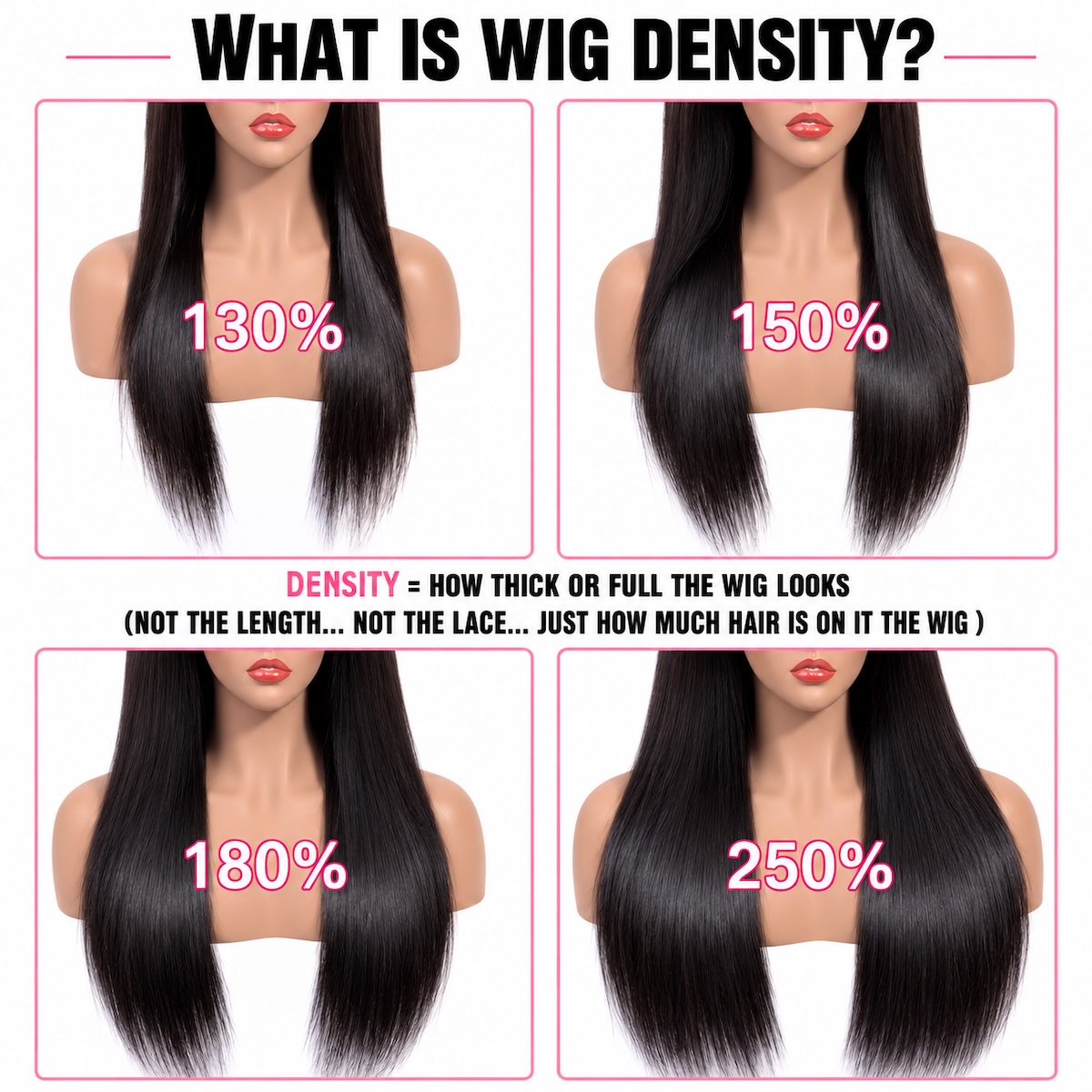
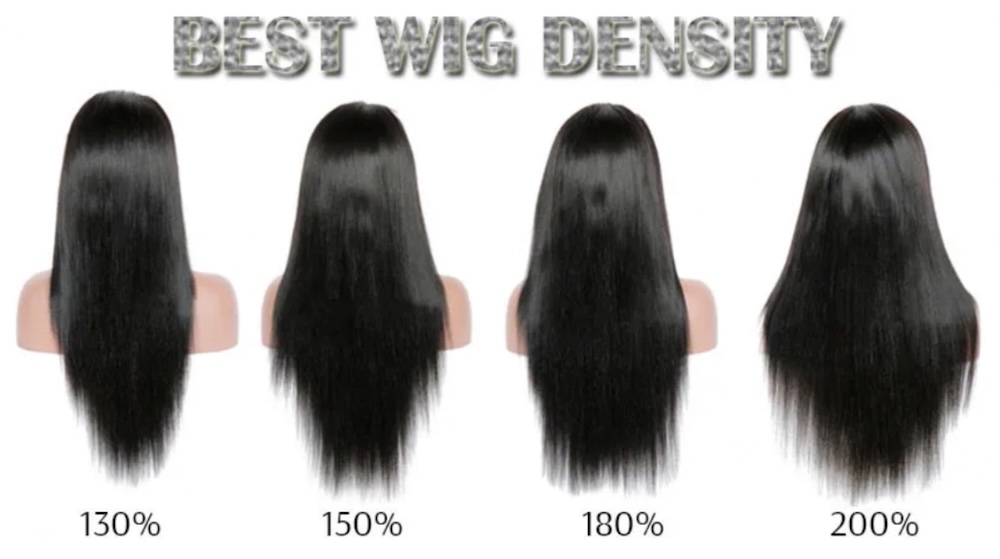
Wig density describes how full or thick a wig appears when worn. A lower-density wig contains less hair and usually looks lighter and more natural. A higher-density wig contains more hair, creating a thicker and more voluminous look.
However, the fullest wig is not automatically the best choice. The right density depends on your preferred style, wig length, hair texture, comfort needs and budget.
These descriptions are general guidelines. Density measurements can vary between manufacturers, so two wigs labeled 180% may not look exactly the same.
What Does 150% Wig Density Mean?
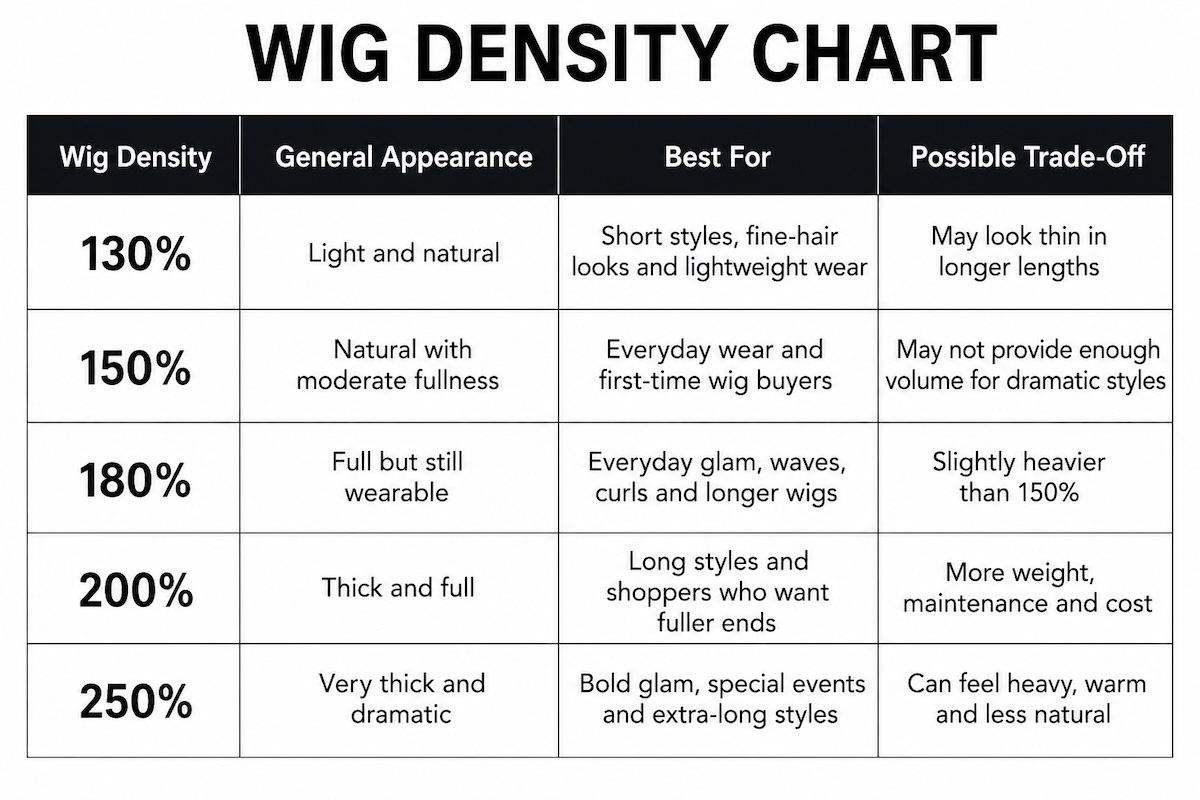
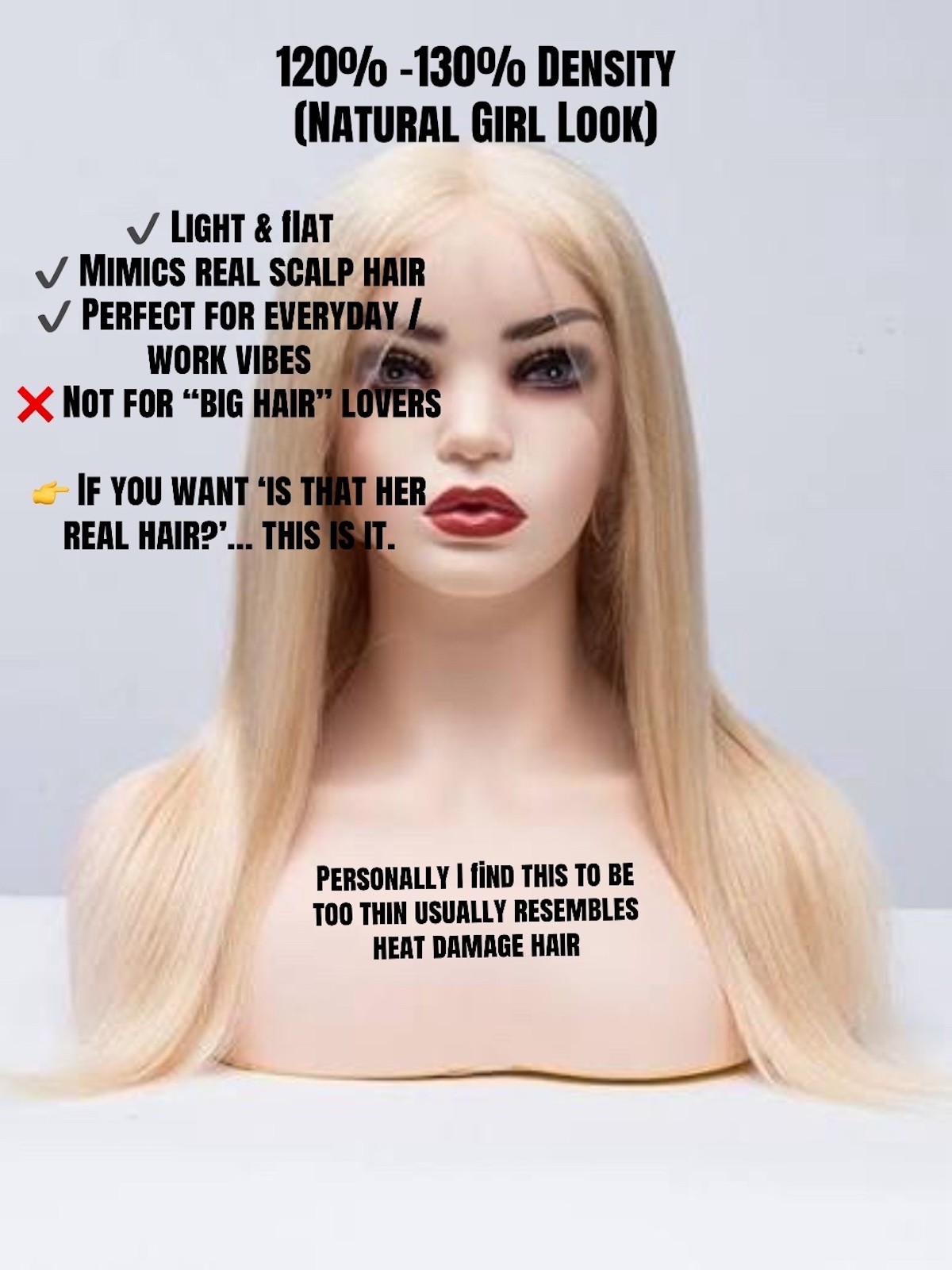
A 150% density wig offers moderate fullness without adding too much weight. It is one of the safest choices for shoppers who want a natural-looking wig for everyday wear.
This density can work especially well for:
Bob and shoulder-length wigs
Straight and lightly wavy textures
Hot weather or long wearing times
Beginners who do not want too much hair
Shoppers who prefer a natural finish
A 150% density wig is not necessarily thin. On a short or curly wig, it may still appear surprisingly full. However, very long straight wigs at this density may look lighter toward the ends.
What Does 180% Wig Density Mean?
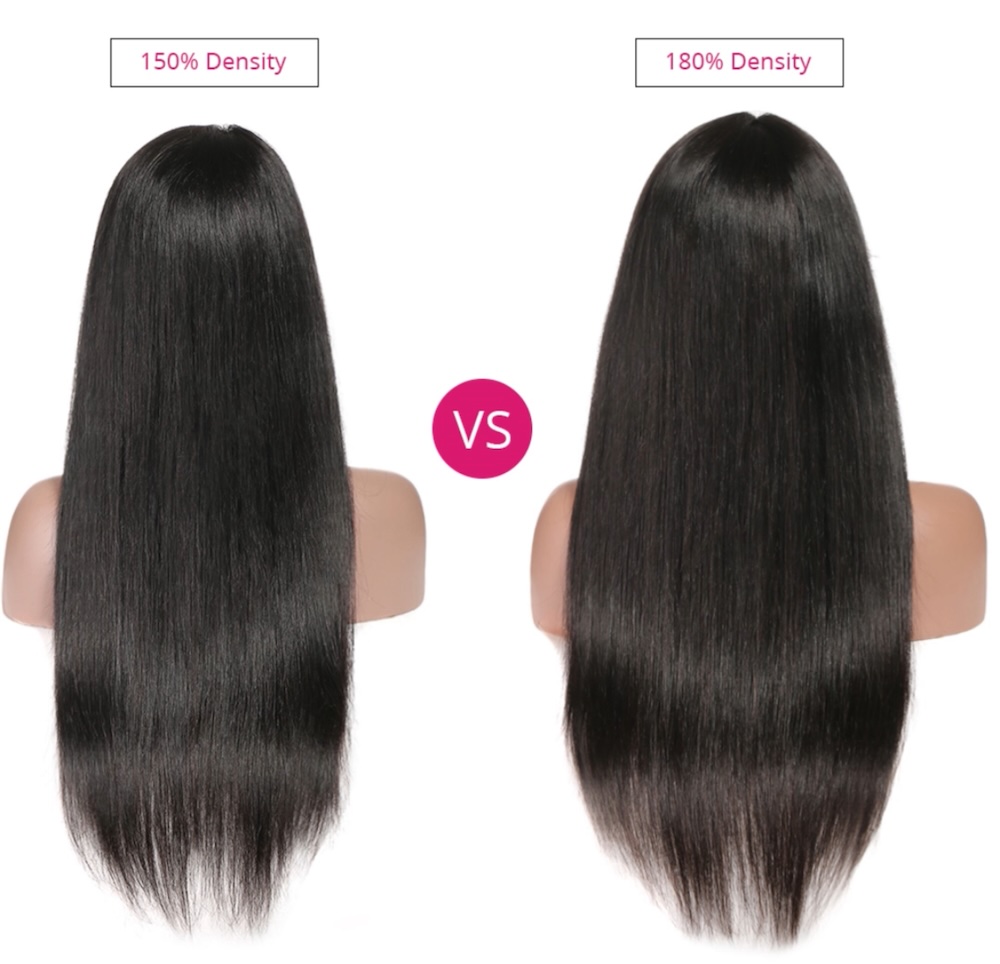
A 180% density wig offers more volume than a 150% wig while remaining practical for regular wear. It is a popular middle option for shoppers who want noticeable fullness without moving into extremely thick territory.
Choose 180% density if you want:
A fuller everyday hairstyle
More body in a long wig
Defined waves or curls
Extra styling flexibility
A balance between volume and comfort
For many shoppers, 180% is the sweet spot. It provides enough hair for a glamorous look but usually feels more manageable than a 250% density wig.
What Does 200% Wig Density Mean?
A 200% density wig is thick from the top through the length, although the exact distribution of hair depends on the manufacturer.
This density can be useful for long straight, body wave or loose wave wigs because additional hair helps the ends appear fuller. It is also a good option for shoppers who think 180% is not quite thick enough but do not want the weight of 250%.
Keep in mind that 200% density normally requires more detangling, conditioning and drying time than a lower-density wig.
What Does 250% Wig Density Mean?
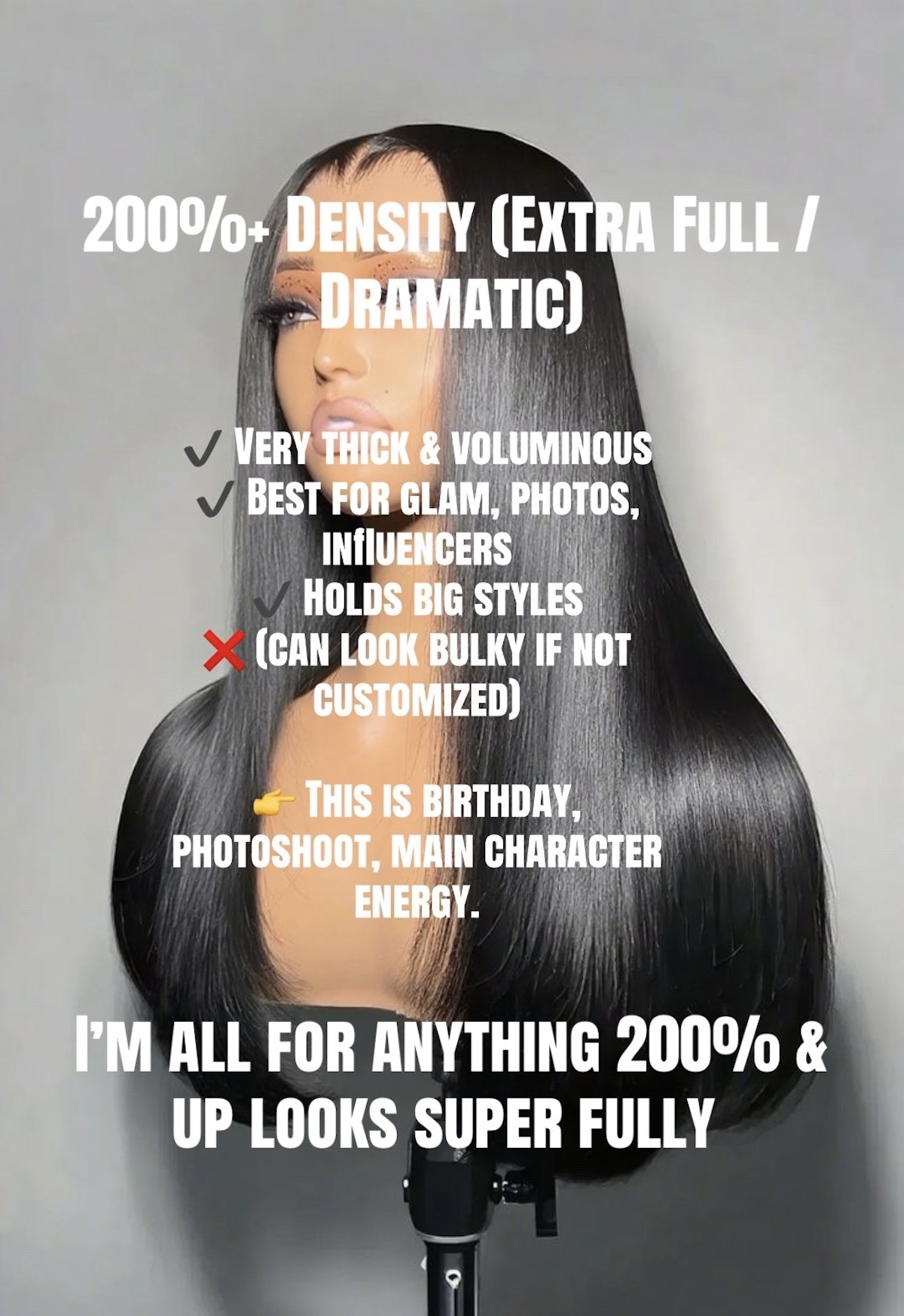
A 250% density wig is designed to create a very thick, bold and voluminous appearance. It is often used for extra-long wigs, dramatic curls, photoshoots and special-event hairstyles.
A 250% wig may be right for you if you love:
Big, glamorous hair
Thick curls and waves
Extra-long lengths
Full-looking ends
Dramatic styling
However, 250% is not automatically the best density. The additional hair can make the wig heavier, warmer and more expensive. It may also require more products and maintenance.
If your goal is a light, natural everyday look, 150% or 180% will probably be more suitable.
150% vs. 180% vs. 250% Density
The main difference is the amount of hair and the final level of fullness.
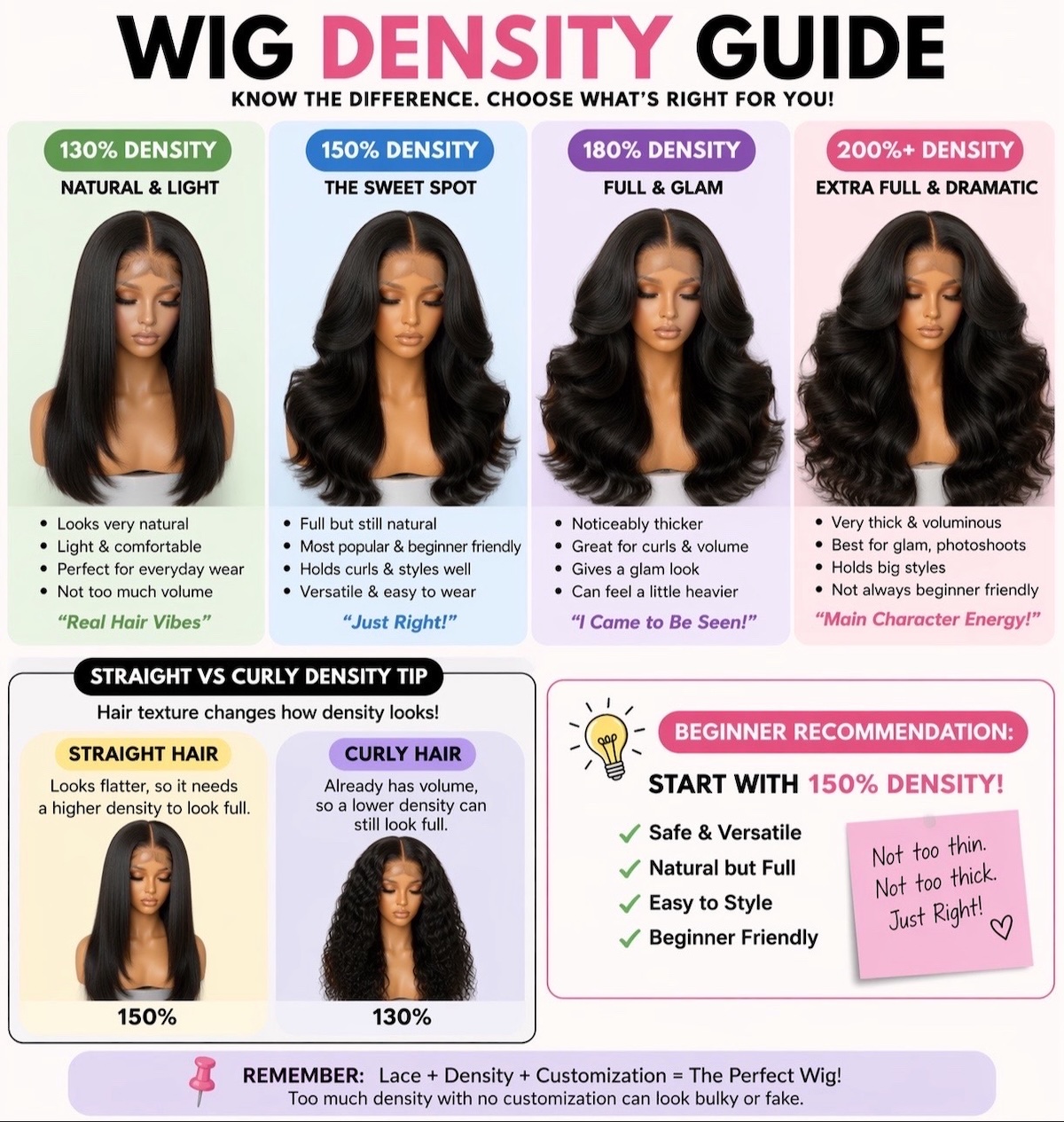
A 150% density wig looks lighter and more natural. A 180% density wig gives you a fuller appearance without becoming excessively heavy. A 250% density wig creates the thickest and most dramatic result.
The best choice depends on the look you want:
Choose 150% for natural everyday wear.
Choose 180% for balanced fullness and everyday glam.
Choose 200% for long hair with fuller-looking ends.
Choose 250% for maximum volume and a bold style.
Does Wig Density Equal a Certain Number of Bundles?
You may see charts claiming that 150% density equals two bundles, 180% equals three bundles and 250% equals five bundles. These comparisons should not be treated as exact measurements.
The amount of hair needed to make a wig changes according to:
Hair length
Hair texture
Cap construction
Lace size
Hair strand thickness
How the hair is distributed across the cap
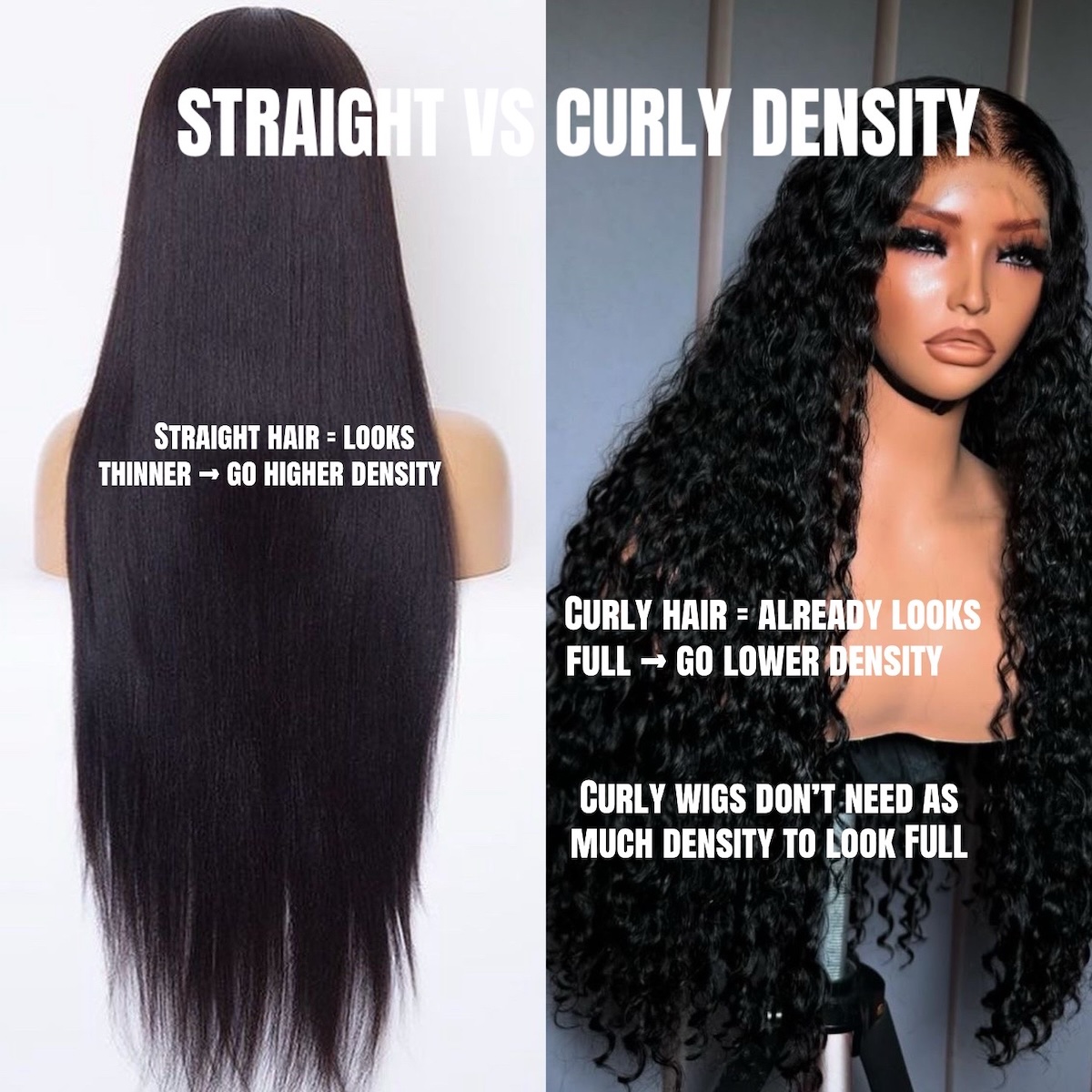
For example, a 30-inch wig generally needs more hair than a 14-inch wig to maintain similar fullness through the ends. Curly hair may also appear fuller than straight hair at the same stated density.
Use density percentages as a general comparison, not as a guaranteed bundle count.
Does Higher Density Mean Better Quality?
No. Density tells you how full a wig is, but it does not tell you whether the hair is high quality.
A 250% density wig can still have problems with tangling, shedding, dry ends or poor lace. A well-made 150% wig may look more realistic and last longer.
When judging quality, also check:
Whether the hair is human, Remy or virgin hair
Lace type and lace color
Hairline construction
Knot size and bleaching
Shedding and tangling reviews
Cap size and fit
Hair quality after washing
Density is only one part of the wig.
Does Wig Density Affect Knots and the Hairline?
Density affects how much hair is attached to the cap, but it does not directly tell you whether the knots are small or well made.
A high-density wig may have more hair around the lace area. If the hairline is not properly plucked, it can look too thick. Pre-plucking may help create a softer transition around the forehead.
Knot visibility also depends on the lace, hair color, knot size and whether the knots have been bleached. Do not choose density based only on claims about knots.
How Length and Texture Change the Look of Density
The same density can look very different on different wigs.
Curly, kinky and water wave textures naturally create more visible volume. You may not need 250% density to achieve a full curly style.
Straight hair lies flatter against the head, so a long straight wig may benefit from 180% or 200% density if you want fuller ends.
Short wigs usually need less hair to look complete. A 150% bob can appear fuller than a 150% 30-inch straight wig.
How to Choose the Best Wig Density
Before buying, ask yourself these questions:
Do I want a natural or dramatic look?
Will I wear the wig every day or only for special events?
Do I prefer lightweight comfort or maximum volume?
Is the wig short, medium-length or extra-long?
Is the texture straight, wavy, curly or kinky?
Am I prepared for the extra maintenance of a high-density wig?
For most first-time buyers, 150% or 180% is a practical starting point. If you already know that you love very thick hair, consider 200% or 250%.
Frequently Asked Questions
Is 180% density better than 150%?
Not necessarily. A 180% wig is fuller, but a 150% wig may look more natural and feel lighter. The better option depends on your style and comfort preferences.
Is 150% density good for everyday wear?
Yes. It offers a natural appearance with enough fullness for many short and medium-length styles.
Is 250% density too thick?
It can be too thick for shoppers who prefer lightweight or natural-looking hair. However, it may be ideal for dramatic curls, extra-long styles and special occasions.
Which density looks the most natural?
Around 130% to 150% generally creates the lightest and most natural appearance. Texture, length, hairline and styling also affect the final result.
Which density is best for long wigs?
A density of 180% to 200% can help long wigs appear fuller through the ends. Choose 250% only if you want a particularly thick and dramatic look.
Does higher density cost more?
Usually, yes. Higher-density wigs contain more hair, so they are often heavier and more expensive.
Final Verdict
Wig density changes how full a wig looks, how it lays on your head and how comfortable it feels. But more hair does not always mean a better wig.
Choose 150% for a natural, lightweight style, 180% for balanced everyday fullness, 200% for thicker long hair and 250% for bold, dramatic volume.
The secret is not choosing the fullest wig. It is choosing the density that fits your length, texture, lifestyle and personal style.