This post contains affiliate links, and I may earn a small commission if you make a purchase through them. These earnings help me maintain this website and continue creating more helpful content. Thank you for supporting my work. ❤️
When shoppers see a wig labeled Rebecca, QVR, Sleek, NOBLE or JOEDIR online, they may not realize that these brands are connected to one of China’s best-known hair-product manufacturers.
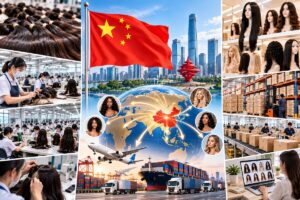
Henan Rebecca Hair Products Co., Ltd.—usually called Rebecca Hair—is based in Xuchang, Henan Province. Often described as China’s “wig capital,” Xuchang is home to more than 4,000 hair-product businesses. According to Xinhua, roughly six out of every ten wigs sold worldwide are made in the city.
Rebecca grew alongside this enormous manufacturing cluster. What began as a local hair-processing trade developed into a company with factories and sales operations across several continents. Today, Rebecca is also trying to move beyond its traditional role as a manufacturer and wholesaler by selling more products directly to wig shoppers through AliExpress, Amazon, independent websites, social commerce and other online channels.
Xuchang’s Wig Industry Began With Collected Human Hair
The roots of Xuchang’s hair industry go back much further than modern factories or e-commerce.
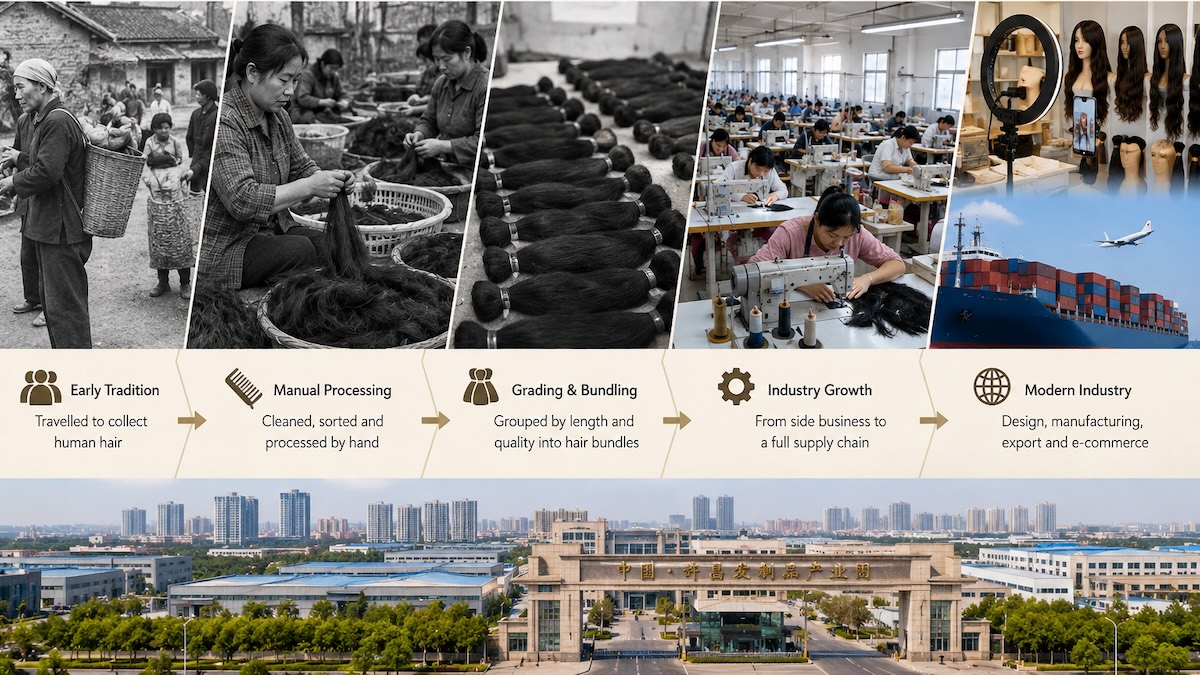
Around Xiaogong Village in Lingjing Town, local residents had a long tradition of traveling from place to place to collect human hair. The hair was cleaned, sorted and processed through a series of labor-intensive steps. It was then grouped by length and quality into bundles known locally as hair bundles (档发), or graded hair bundles.
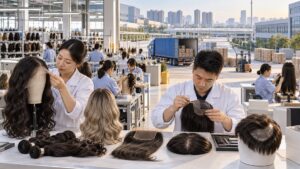
At first, processing hair was often a side business that brought additional income to farming families. Over time, however, the knowledge, labor network and supply of raw hair created the foundation for a much larger industry. Xuchang gradually developed a complete supply chain covering hair collection, fiber production, product design, manufacturing, export and e-commerce.
This local ecosystem would later give Rebecca access to skilled workers, raw materials and decades of specialist knowledge.
From a Local Factory to the North American Market
Rebecca’s predecessor can be traced to the Xuchang County Hair Products General Factory, established in 1990. In 1993, founder Zheng Youquan formed a Sino-American joint venture with New Asia International, creating Henan Rebecca Hair Products Co., Ltd.
The partnership gave the company a direct route into North America, then—and still today—one of the world’s largest wig and hair-extension markets. Rebecca supplied large volumes of hair products to the United States and expanded quickly at a time when Korean-owned companies and distributors played a major role in the American wig business.
Company and industry reports from the period show how rapidly Rebecca grew. Its reported share of the US hair-products market rose from 11.3% in 2001 to 12% in 2002 and 15.4% in 2003. In 2003, the company was listed on the Shanghai Stock Exchange, becoming widely known in China as the country’s “first wig stock.” Its sales reached RMB 520 million in 2004.
Much of Rebecca’s early North American business, however, was based on OEM and private-label manufacturing. In other words, consumers could be buying products made by Rebecca without seeing the Rebecca name on the package. That model delivered scale, but it also left overseas distributors and retailers with much of the control over branding and the final customer relationship.
Expanding Production and Brands in Africa
After establishing a strong position in North America, Rebecca expanded more deeply into African markets.
The company did more than export finished wigs from China. It established sales companies and manufacturing operations in countries including Nigeria, Ghana and Mozambique. This allowed Rebecca to produce or distribute products closer to local consumers and adapt its range to different hair preferences, price levels and retail markets.
Its African business has generally used two models:
Rebecca’s Chinese parent company sells finished products to local sales subsidiaries, which then distribute them in their markets.
The parent company supplies raw and auxiliary materials to overseas manufacturing subsidiaries, which make and sell finished products locally.
Rebecca also developed market-specific brands. NOBLE, introduced for African consumers in the early 2000s, became an important part of its regional strategy. Sleek helped the company expand in Europe and other international markets.
According to Rebecca’s 2025 annual report, the group had 12 overseas subsidiaries at the end of the year: eight focused on sales and four focused on manufacturing. These entities included operations in the United States, the United Kingdom, Brazil, Nigeria, Ghana, South Africa, Kenya, Tanzania, Cambodia and Mozambique.
The Second Generation and the Shift From B2B to Direct Sales
For many years, Rebecca relied heavily on a traditional B2B export model. It manufactured hair products, sold them to overseas importers or distributors, and depended on those partners to reach stores and consumers.
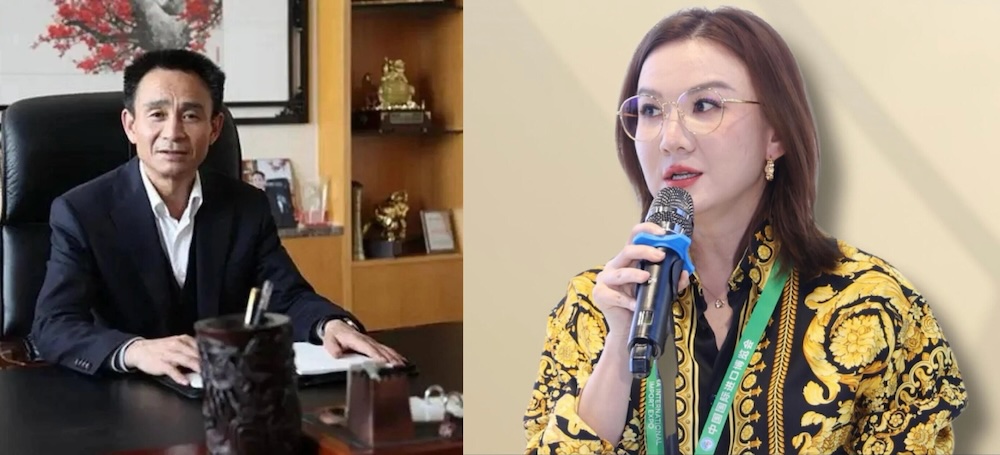
The company began placing greater emphasis on direct-to-consumer sales after Zheng Wenqing, the founder’s daughter, moved into senior leadership. Born in 1981 and educated in international marketing management, she became Rebecca’s general manager in April 2015 and succeeded Zheng Youquan as chairwoman in 2021. She currently serves as both chairwoman and general manager.
The year 2015 marked an important change in the company’s channel strategy. Rebecca began directing more resources toward its own brands and online retail instead of depending primarily on intermediaries. Its international channel mix has since expanded to include Amazon, independent brand websites, TikTok Shop, SHEIN and other online marketplaces and social-commerce platforms.
This change matters because selling directly gives a manufacturer more control over product presentation, pricing, shopper feedback and brand loyalty. It can also improve access to consumer data and make it easier to respond to fast-moving trends such as glueless wigs, pre-cut lace, beginner-friendly units and ready-to-wear styles.
However, direct retail is not automatically more profitable. Online advertising, fulfillment, influencer marketing, returns and platform fees can be expensive. Rebecca reported 2025 revenue of approximately RMB 1.293 billion (about US$180 million at a rough 2025 exchange rate), up 4.38% year over year, and said online sales had increased to nearly 40% of total revenue. The company nevertheless recorded a net loss of about RMB 81.9 million for the year. Rebecca has said that the rising cost of expanding its consumer-facing business has weighed on profitability.
The numbers show both sides of its transformation: online channels are becoming a major part of the business, but building consumer brands requires more than manufacturing scale.
The Six Main Brands Connected to Rebecca Hair
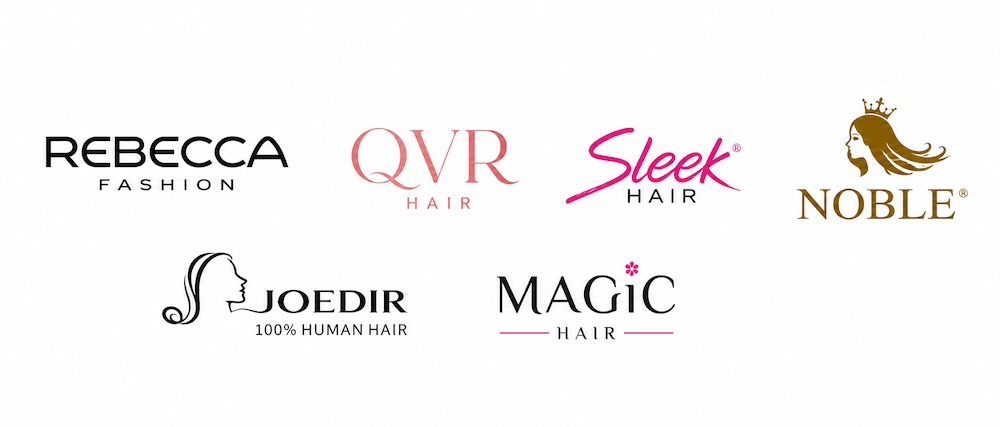
Rebecca’s public company information identifies six principal self-owned brands:
Rebecca – The group’s flagship name, with products aimed at both the Chinese and international markets.
QVR – An online-focused brand best known to many overseas shoppers for human-hair wigs and lace wigs.
Sleek – A long-established international brand with a presence in the United Kingdom, Europe and parts of Africa.
NOBLE – A brand developed for African markets, offering wigs, braiding hair, extensions and other hair products.
JOEDIR – A consumer-facing wig brand with listings on marketplaces including Amazon.
Magic – Another brand within Rebecca’s international portfolio, associated mainly with overseas hair-product markets.
Not every brand sells the same products or serves the same region. Some focus more heavily on human-hair wigs, while others offer synthetic wigs, braiding hair, weaves, extensions or hairpieces. Availability can also vary considerably by country and platform.
What Rebecca’s Story Means for Wig Shoppers
Rebecca’s history offers a useful look at how the modern wig industry works.
First, the name displayed on an online storefront may represent only one part of a much larger manufacturing group. Several brands can share a parent company while targeting different markets, textures, price ranges or shopper needs.
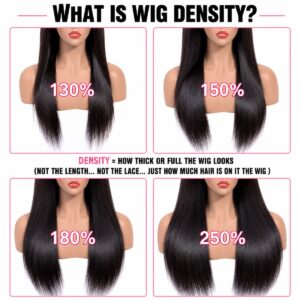
Second, a large manufacturer is not a guarantee that every product will deliver the same quality. Construction, hair type, lace, density and quality control can differ across brands and even across individual listings. Shoppers should still read recent reviews, examine customer photos, check return policies and confirm product specifications before ordering.
Finally, Rebecca’s move from private-label manufacturing to direct online retail reflects a wider change in China’s wig industry. Manufacturers that once remained invisible behind overseas distributors are increasingly building their own brands and speaking directly to consumers.
For US shoppers—especially Black women who have long driven innovation and demand in the wig market—this means more choice and more direct access to manufacturers. It also makes independent product research more important, because a familiar-looking storefront does not always explain who made the product, how two related brands differ or which seller is officially connected to the brand.
Where to Buy Rebecca, QVR, Sleek, NOBLE, JOEDIR and Magic Products
Below are the online stores and marketplace pages we have identified for Rebecca Hair’s major brands. Store availability and ownership can change, so shoppers should verify the seller name, return policy, shipping location and recent customer feedback before purchasing.