This post contains affiliate links, and I may earn a small commission if you make a purchase through them. These earnings help me maintain this website and continue creating more helpful content. Thank you for supporting my work. ❤️
Xuchang, China, is one of the world’s largest wig manufacturing centers. According to the Xuchang municipal government, about six out of every ten wigs sold worldwide come from the city
1. Use AI to Find Products That Can Sell
Choosing the wrong wig color, length or texture can leave sellers with unsold inventory.
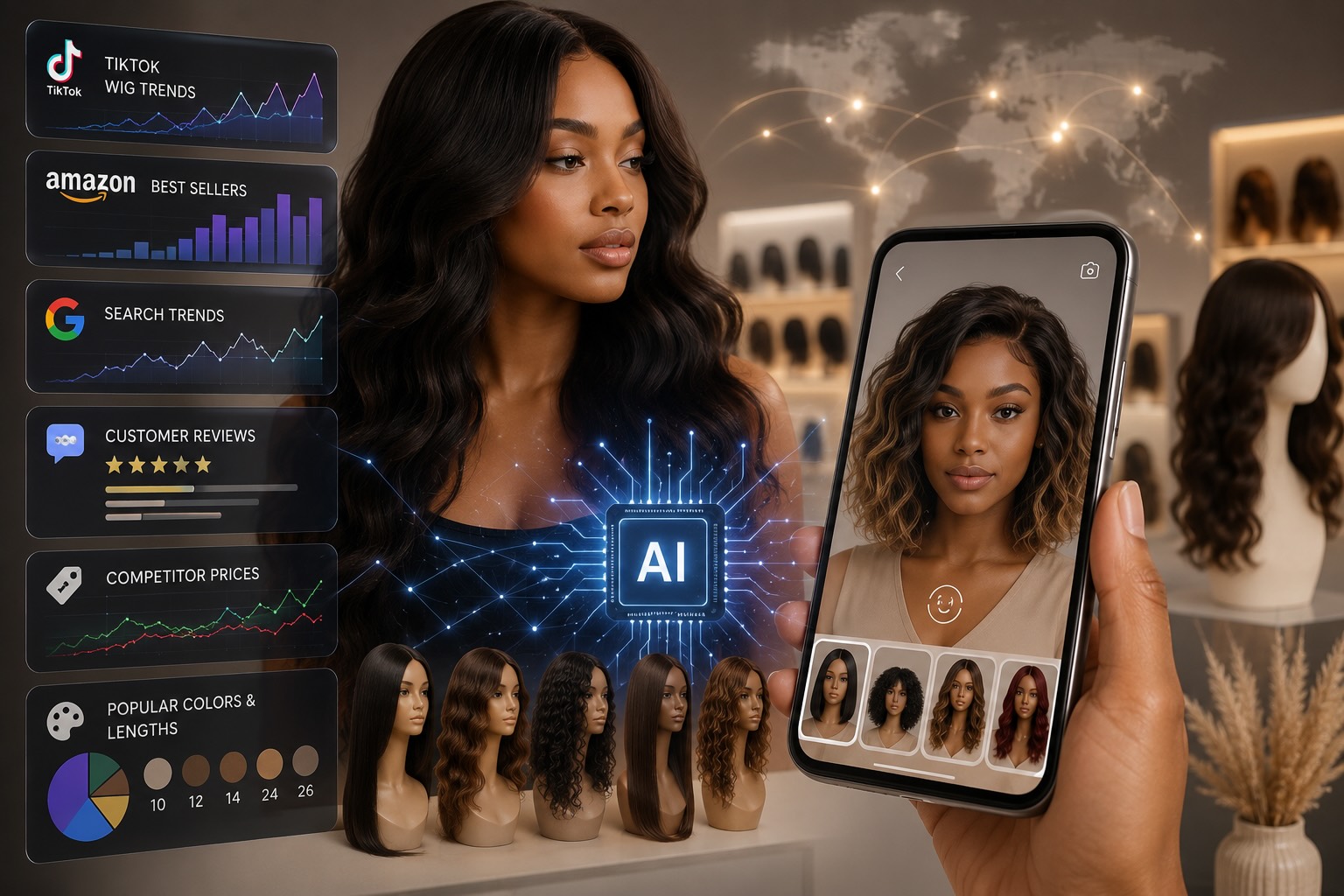
AI can help analyze:
TikTok wig trends
Amazon best-selling products
Google search trends
Customer reviews and questions
Competitor prices
Popular colors, lengths and textures
For example, sellers can use AI to compare demand for 12-inch bob wigs, 24-inch body wave wigs, colored lace front wigs or beginner-friendly glueless wigs.
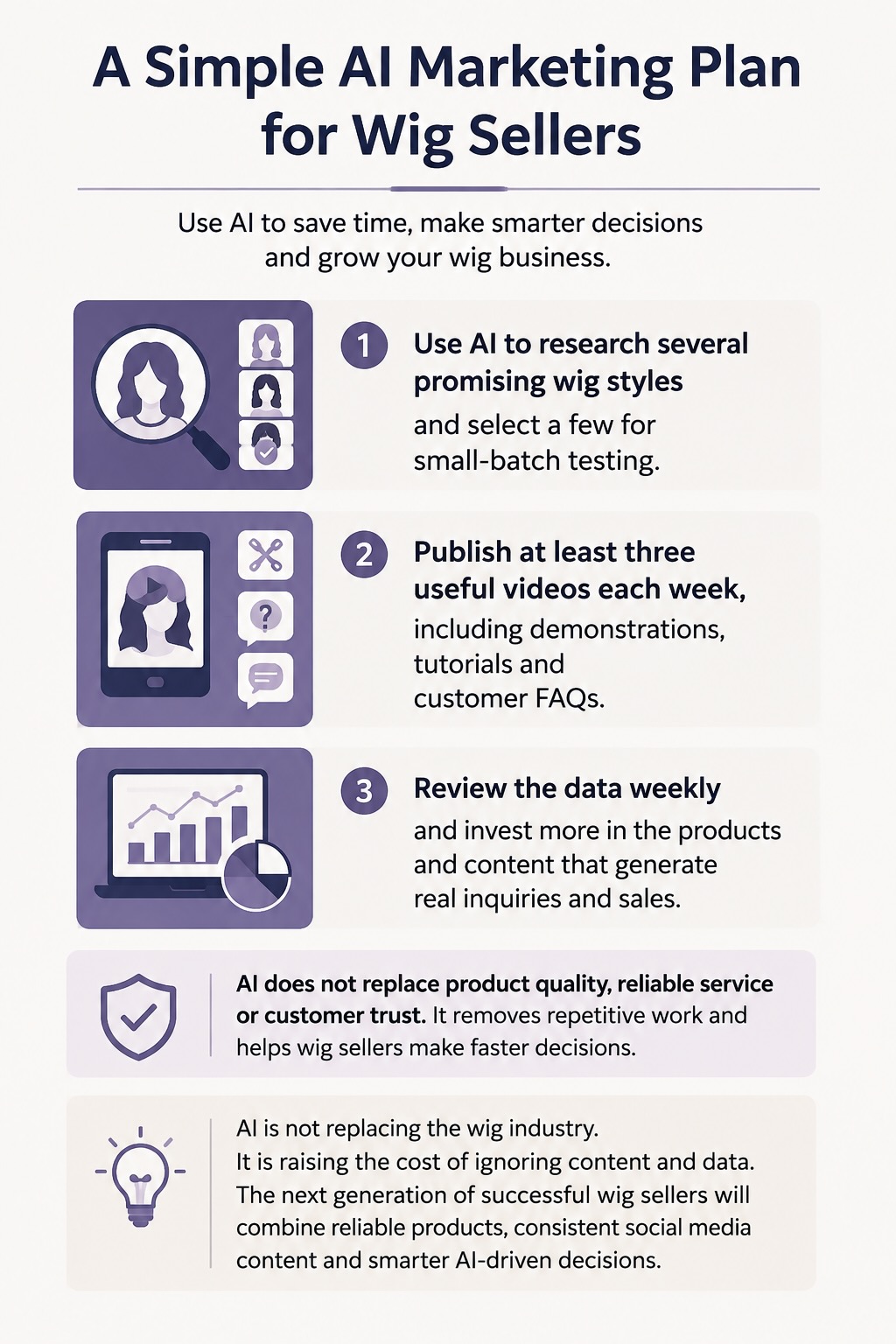
AI cannot guarantee that a product will become popular. However, it can help sellers identify demand signals, test smaller orders and avoid relying only on guesswork.
2. Create More Wig Content in Less Time
Wigs are naturally suited to video marketing.Customers want to see the hairline, lace, texture, density and final look before buying.
AI tools can turn one wig into several types of content:
Product descriptions
TikTok and Instagram captions
Short-video scripts
Wig installation tutorials
Before-and-after video ideas
Care tips and FAQs
Email campaigns
Wholesale sales messages
A seller can film one product demonstration and use AI to create different hooks, captions and versions for TikTok, Instagram Reels and YouTube Shorts.
AI-generated content must still match the real product. Sellers should never use AI images or descriptions that exaggerate hair quality, density or lace performance.
3. Offer AI Virtual Wig Try-Ons
One of the biggest problems in online wig shopping is uncertainty. Customers may like a wig but worry that the color, length or hairstyle will not suit them.
An AI virtual wig try-on allows shoppers to upload a photo and preview different styles before ordering. This can help customers:
Compare several wig colors
Test short and long hairstyles
Explore straight, curly or wavy textures
Feel more confident before buying
The result should be clearly described as a visual simulation. Sellers must also protect customer photos and explain how uploaded images are stored or deleted.
4. Use Social Media to Find Retail and Wholesale Buyers
Trade shows remain useful, but many buyers now research a supplier online before sending an inquiry.
Retail customers usually respond to transformations, tutorials, styling ideas and problem-solving videos. Wholesale buyers need different information, such as:
Factory and production videos
Hair and lace specifications
Quality-control procedures
Minimum order quantities
Private-label services
Packaging options
Production and delivery times
AI can rewrite and translate this content for different markets. Every post should include a clear next step, such as visiting a product page, requesting a catalog, ordering a sample or contacting the seller on WhatsApp.
Views alone do not create a business. Content needs a direct path from attention to inquiry and purchase.
5. Let Data Guide Your Next Move
Wig sellers should regularly track:
Video watch time
Shares, saves and comments
Product-page clicks
Customer inquiries
Conversion rates
Repeat purchases
Returns and complaints
AI can summarize comments and reviews to identify common customer needs. If buyers repeatedly ask for smaller caps, darker lace, thicker density or easier installation, that information should influence the next product order.